
Weight Management
Understanding Compounded Medications: What Patients Should Know
If you’re exploring treatment for weight management, hair restoration, or healthy aging, you may see the word “compounded” next to a medication’s name. Many people aren’t sure what it means, or how a compounded medication differs from a brand-name medicine they’ve heard of.
This guide explains what compounding is, what “not FDA-approved” means for you, why a licensed clinician may prescribe a compounded medication, and the questions worth asking before you begin treatment.
What Is a Compounded Medication?
A compounded medication is prepared by a licensed pharmacy for an individual patient, based on a prescription from a licensed healthcare provider. The pharmacist combines or adjusts ingredients to create a specific strength, form, or formulation.
Pharmacies that compound medications for individual patients do so under section 503A of the federal Food, Drug, and Cosmetic Act and under the pharmacy rules of the states where they are licensed.
Depending on the prescription, a compounded medication may be an injection, a tablet or capsule, a nasal spray, or a cream, foam, or solution.
What Does “Not FDA-Approved” Mean?
Before an FDA-approved medication can be sold, the U.S. Food and Drug Administration reviews evidence about its safety, effectiveness, and manufacturing quality.
Compounded medications do not go through that review. Compounded medications are not FDA-approved and have not been evaluated by FDA for safety, effectiveness, or quality. In practice, that means:
- It is not a generic. A compounded medication is not a generic version of a brand-name medicine. It should not be assumed to be the same as, or interchangeable with, an FDA-approved product, even when it contains the same active ingredient.
- It can vary. Strength, ingredients, form, appearance, and beyond-use date can differ between prescriptions, between pharmacies, and between batches.
- It has no FDA-approved labeling. A compounded medication does not come with FDA-approved labeling or an FDA Medication Guide.
- Some risks may not be fully known. How well it works, how the body absorbs it, and its long-term effects may not be fully known. Compounded injections also carry a risk of contamination or incorrect strength.
Why Might a Clinician Prescribe a Compounded Medication?
FDA advises that a compounded medication be considered when a patient’s medical needs cannot be met by an FDA-approved medication. A licensed clinician may decide a compounded medication is appropriate when, for example, a patient needs:
- A strength or dose that is not commercially available
- A different form, such as a nasal spray or topical, instead of a tablet or injection
- A formulation without an ingredient the patient is allergic to
The decision should be based on an individual medical evaluation and a specific patient need, not simply on price or preference.
What About Compounded GLP-1 Medications?
Semaglutide and tirzepatide are the active ingredients in several FDA-approved brand-name medications. Compounded semaglutide and compounded tirzepatide are prepared by a licensed pharmacy for an individual patient and are not themselves FDA-approved, which is why the pharmacy’s licensing and sourcing matter.
Some compounded formulations combine the active ingredient with other ingredients, such as a vitamin. The presence of an additional ingredient does not mean a formulation is more effective than an FDA-approved medication.
FDA-Approved Medications May Be Available
For many conditions, an FDA-approved medication is available. WellPeps offers only compounded medications, not brand-name FDA-approved products. FDA-approved medications may be available through another provider and pharmacy, and you can ask your clinician at any time whether one may be right for you.
How Compounded Medications Are Prescribed Through WellPeps
Treatment begins with a medical review. You answer a series of online health questions, and a licensed clinician reviews your health information to decide whether treatment is appropriate for you. A prescription is not guaranteed.
If a clinician prescribes a compounded medication, a state-licensed U.S. pharmacy prepares it and ships it to you. The pharmacy is named on your prescription label. WellPeps does not prescribe, compound, or ship medication.
Questions to Ask Your Clinician
- Is the medication you’re recommending FDA-approved or compounded?
- Why is a compounded medication appropriate for my needs?
- Which pharmacy will prepare it, and where is it licensed?
- What side effects should I watch for, and who do I contact if I have one?
- Is there an FDA-approved option I should consider?
For more detail, read our Compounded Medication Disclosure and Consent.
Weight Management Treatment Options
If you’re exploring GLP-1 medications, WellPeps offers several provider-guided treatment options designed around your individual health needs and goals.
Your provider will recommend the treatment that’s right for you after reviewing your health history.

Semaglutide Injection
- All-Inclusive Pricing
- Weekly injection
- Helps regulate appetite
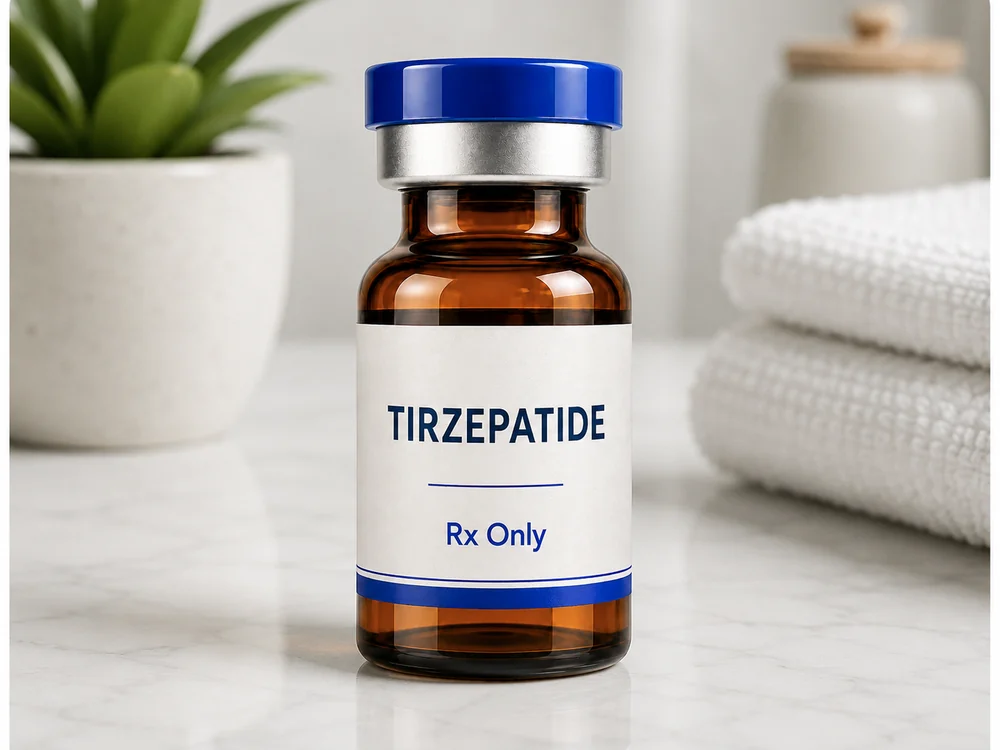
Tirzepatide Injection
- All-Inclusive Pricing
- Dual GIP/GLP-1 medication
- Weekly injection
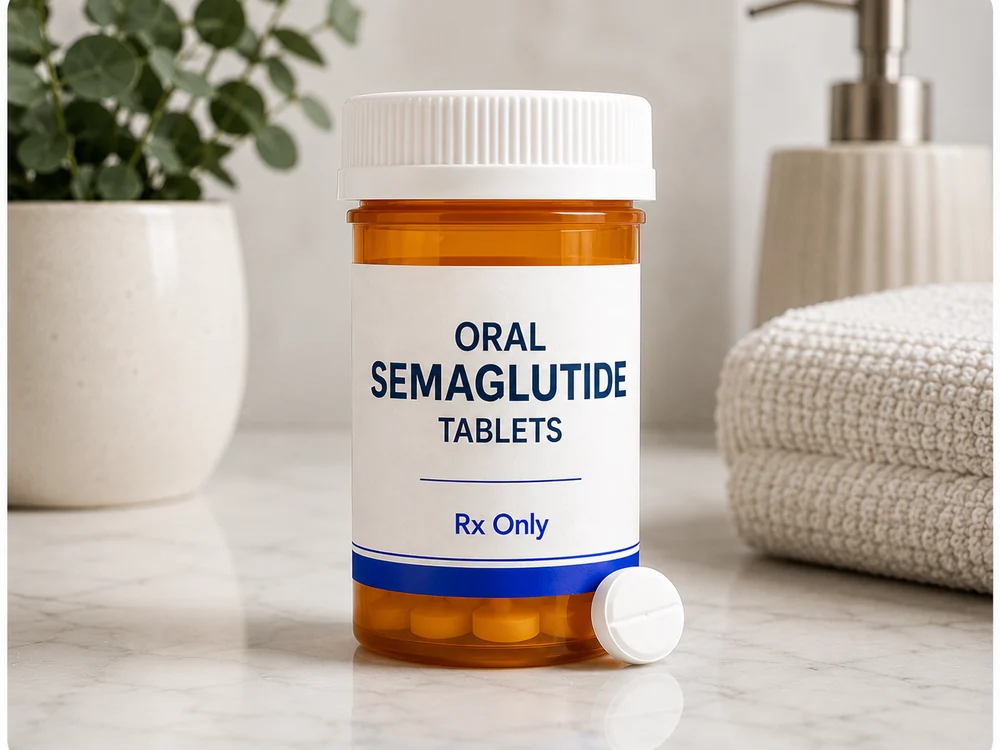
Oral Semaglutide Tablets
- All-Inclusive Pricing
- Needle-free option
- Daily tablet
Not available to California residents.
Learn MoreOne monthly price covers your licensed clinician’s review, follow-up care, your medication if prescribed, messaging with your care team, and standard shipping. Lab tests are billed separately. You pay at checkout, and if a clinician does not prescribe, we refund you in full.
Key Takeaways
- A compounded medication is prepared by a licensed pharmacy for an individual patient, based on a prescription.
- Compounded medications are not FDA-approved and have not been evaluated by FDA for safety, effectiveness, or quality.
- A compounded medication is not a generic and should not be assumed to be the same as an FDA-approved medication.
- A licensed clinician decides whether a compounded medication is appropriate based on your individual medical needs.
- FDA-approved medications may be available through another provider and pharmacy. Ask your clinician about your options.