
Hair Restoration
Finasteride Explained: Benefits, Considerations, and Common Questions
If you’ve been researching treatment options for hereditary hair loss, you’ve likely come across finasteride. It is one of the most well-known prescription medications used in hair restoration and has been prescribed for many years as part of individualized treatment plans.
Like any prescription medication, finasteride is not appropriate for everyone. Understanding how it works, who it may help, and why a medical evaluation is important can help you make more informed decisions about your hair restoration journey.
Rather than viewing finasteride as a stand-alone solution, it’s helpful to think of it as one potential component of a comprehensive, provider-guided treatment plan.
What Is Finasteride?
Finasteride is a prescription medication that may be used to help treat certain types of hereditary hair loss.
Unlike treatments that focus primarily on encouraging new hair growth, finasteride works by addressing one of the biological factors that contributes to hereditary hair loss in many men.
Because hereditary hair loss develops gradually over time, treatment is generally focused on slowing progression, supporting healthier hair follicles, and preserving existing hair whenever possible.
How Does Finasteride Work?
One of the primary factors involved in male pattern baldness is a hormone called dihydrotestosterone (DHT).
Some hair follicles are genetically sensitive to DHT. Over time, exposure to this hormone may cause those follicles to become progressively smaller, producing finer and shorter hairs until visible hair growth becomes limited.
Finasteride works by reducing the body’s production of DHT. By lowering DHT levels, the medication may help reduce its effects on susceptible hair follicles.
Researchers continue to study the long-term biology of hair loss, but reducing DHT has become an important treatment strategy for many individuals experiencing hereditary hair loss.
Who May Be a Candidate?
Finasteride is not intended for every type of hair loss.
Healthcare providers first determine whether hereditary hair loss is the likely cause before considering whether the medication may be appropriate.
During your evaluation, healthcare providers may consider factors such as:
- Your medical history
- Pattern of hair loss
- Family history
- Current medications
- Existing medical conditions
- Personal treatment goals
- Potential risks and benefits
This individualized evaluation helps ensure treatment recommendations are based on your overall health rather than simply your symptoms.
When Does Treatment Begin to Work?
Hair restoration requires patience.
Hair follicles grow slowly, and visible changes generally occur over months rather than weeks.
Many people become discouraged when they don’t notice immediate improvement, but this is a normal part of the hair growth cycle.
Consistency with treatment and regular follow-up appointments allow healthcare providers to monitor progress and determine whether your treatment plan continues to meet your needs.
Can Finasteride Be Combined With Other Treatments?
In some cases, healthcare providers may recommend combining treatments as part of a comprehensive hair restoration plan.
For example, some patients may receive recommendations that include finasteride along with other prescription treatments, depending on the underlying cause of their hair loss and their individual healthcare needs.
The goal is to develop a personalized strategy rather than relying on a single treatment for every patient.
Understanding Potential Side Effects
Like all prescription medications, finasteride may cause side effects.
Not everyone experiences side effects, and many people tolerate the medication well. However, understanding potential risks is an important part of making informed healthcare decisions.
Before prescribing finasteride, your healthcare provider will review your medical history, discuss potential benefits and risks, answer your questions, and determine whether the medication may be appropriate for your situation.
If you experience new or concerning symptoms while taking any prescription medication, it’s important to contact your healthcare provider promptly.
Why Ongoing Medical Supervision Matters
Hair restoration is not simply about receiving a prescription.
Ongoing follow-up allows healthcare providers to evaluate your response to treatment, monitor your progress, discuss any concerns, and determine whether adjustments may be appropriate over time.
This ongoing relationship helps ensure your treatment plan continues to reflect your health needs and long-term goals.
Setting Realistic Expectations
One of the most important parts of any hair restoration journey is understanding what treatment can realistically achieve.
Hair restoration is generally a gradual process, and results vary from person to person.
Rather than comparing your progress with someone else’s experience, it’s more helpful to focus on your own treatment plan and maintain open communication with your healthcare provider.
Consistent treatment, realistic expectations, and individualized care provide the strongest foundation for long-term success.
Hair Restoration Treatment Options
WellPeps offers clinically backed solutions designed to support hair regrowth and a healthier scalp. Your provider will recommend the approach that’s right for you after reviewing your health history.
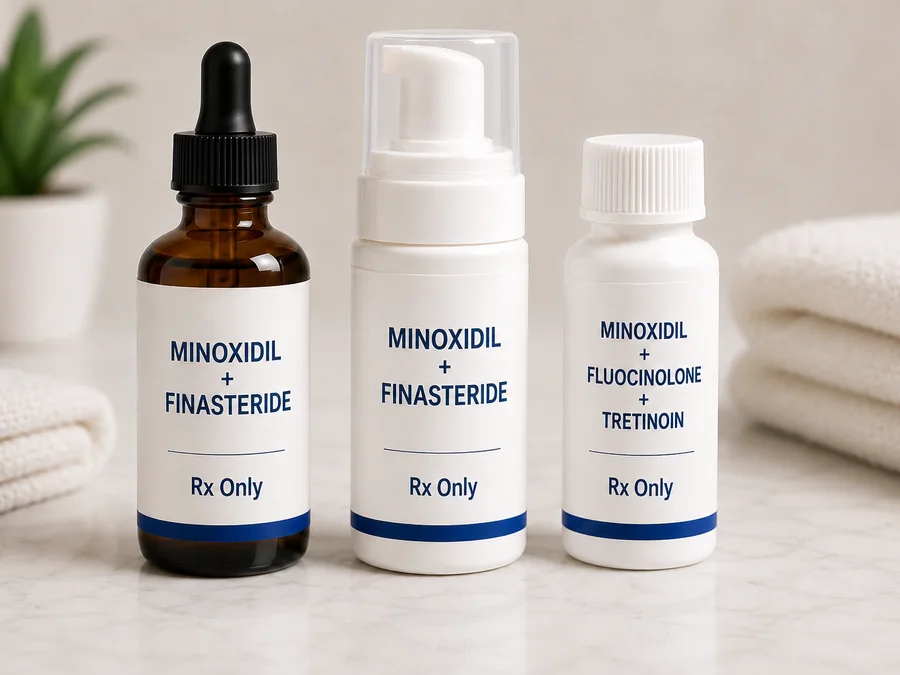
Topical Treatments
Supports healthier, fuller-looking hair with medications applied directly to the scalp.
- Minoxidil + Finasteride
- Minoxidil + Fluocinolone + Tretinoin
- Topical solution or foam
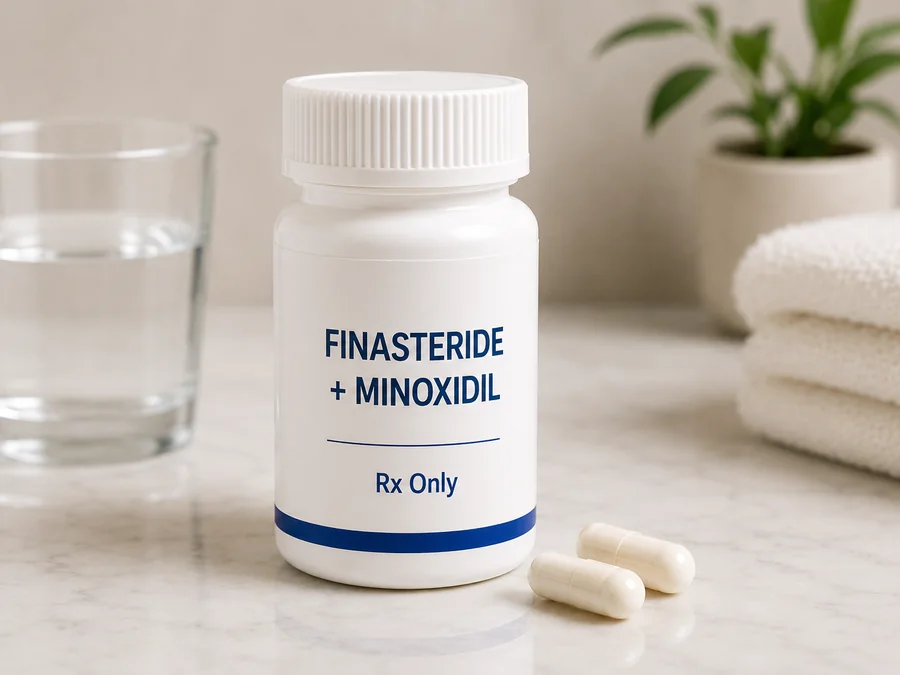
Oral Treatments
Supports healthier hair growth through convenient oral medications.
- Oral Minoxidil
- Minoxidil + Biotin
- Dutasteride
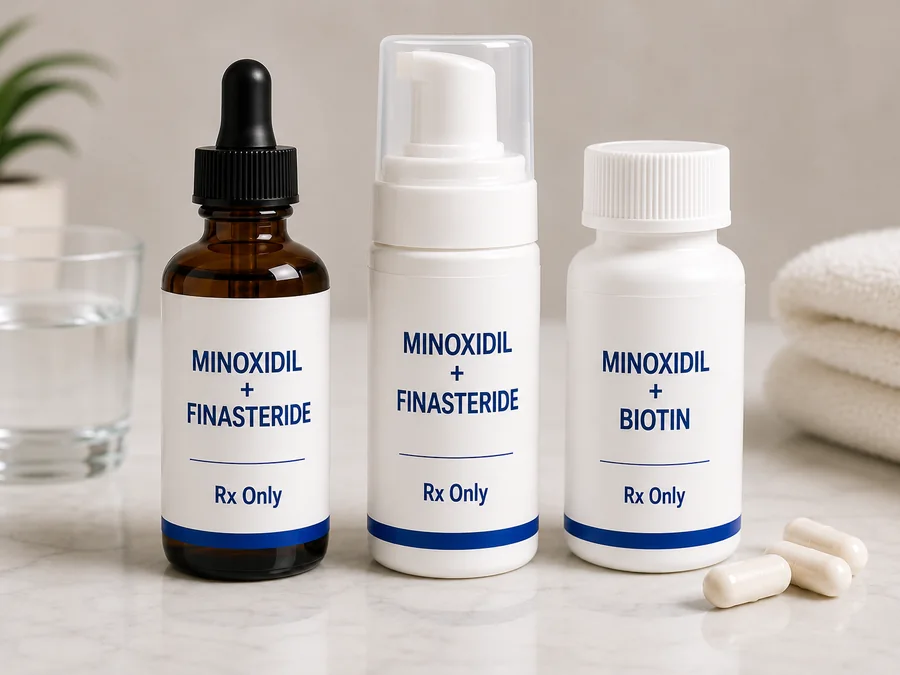
Combination Therapy
Combines topical and oral medications for a comprehensive approach.
- Topical Minoxidil + Finasteride + Oral Minoxidil
- Minoxidil + Finasteride + Biotin
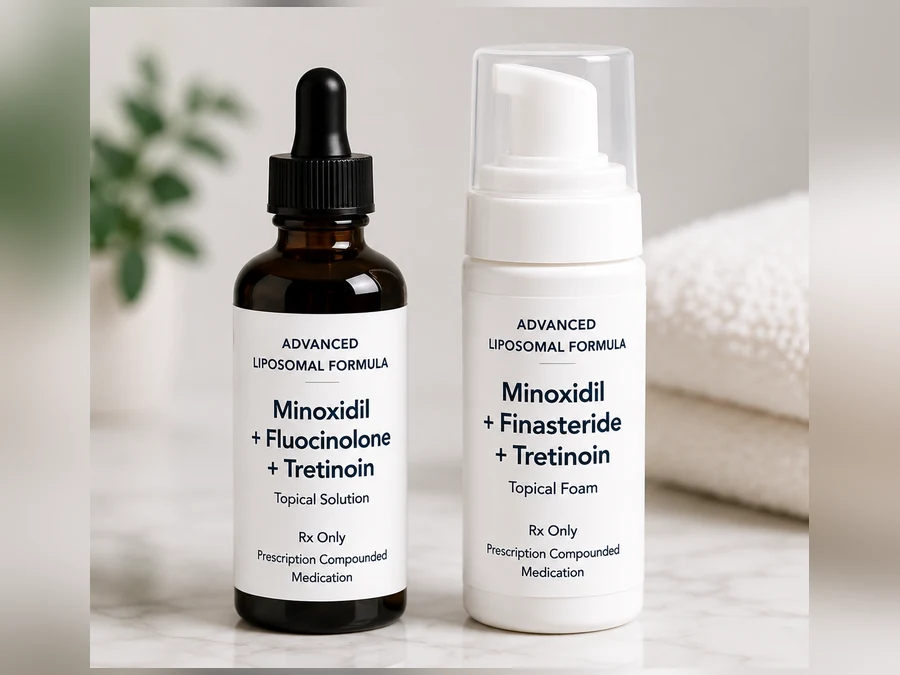
Advanced Liposomal Formulas
Next-generation delivery systems designed for enhanced absorption and results.
- Minoxidil + Fluocinolone + Tretinoin
- Minoxidil + Finasteride + Fluocinolone + Tretinoin
Key Takeaways
- Finasteride is a prescription medication that may be used to treat hereditary hair loss in appropriate candidates.
- It works by reducing DHT, a hormone involved in male pattern baldness.
- Healthcare providers may evaluate many factors before determining whether finasteride is appropriate.
- Hair restoration takes time, and consistent treatment is important.
- Personalized care helps ensure treatment recommendations reflect your individual medical history and health goals.